

The Economist has an article "explaining" the continuing relevance and importance of Communism, years after the Soviet collapse.
Political Theory Daily linked to an article from the International Socialist Review on why Marx still matters.
First Thing offers another potrait of the Main Currents of Kolakowski.
Wednesday, December 06, 2006


Friday, November 10, 2006
More on Marx and his alleged Anti-Semitism
I was asked by a reader "what other arguments do people have that Karl Marx was anti-Semitic?"
When I Google 'Marx' and 'anti-Semitism' the first page I get is James B. Wisker's slanderous post on the 'book' A World Without Jews.
Ostensibly written by Marx, the book was compiled by Dagobert Runes who edited together a series of remarks by Marx from different sources. Runes furthered his deception by giving the book its fictitious title.
Much of the focus of Marx's alleged anit-Semitism is concentrated on Marx's essay On the Jewish Question. The essay in question is in fact a defense of Jewish Political Rights, not proof of Marx's bias towards Jews.
But general ignorance of the style, content and true target of the essay allow for an easy effort by duplicitious scholars to repackage the powerful defense of Jewish rights as a ruthlessly anti-Semitic piece of propaganda.
Hal Draper concludes, "few discussions of the essay explain clearly its political purpose and content in connection with the Jewish emancipation question, or even accurately present the views of its target, Bauer." [1]
The second page Google directs us to ;however, is a powerful champion of Marx's essay as a defense of Jewish rights. The article by Robert Fine appears in the journal Engage. Engage is a resource which "challenges contemporary Anti-Semitism."
In the article Mr. Fine comes out swinging against any pretension that Marx was an Anti-Semite.
"Let us explode the myth that Karl Marx was in some sense anti-Semitic in his critique of capitalism."
Robert Fine's case is echoed by my statement that much of the misunderstanding of Marx stems from what he calls the "deafness to the uses of the ironic style in Marx’s writings."
Mr. Fine explains that behind Marx's article regarding the 'Jewish Question' was a plan "to develop a radical critique of all existing conditions which distinguished itself from other forms of radicalism by its complete and explicit rejection of any anti-Semitic coloration."
Taking advantage of the ignorance and general hostility towards Communists, opponents of Marx advanced numerous fabrications against his essay On the Jewish Question.
For a fuller understanding of the background of the Western anti-Semitism entailed here see Hal Draper's account in Marx and the Economic-Jew Stereotype.
The first of the many fabrications against the essay implies that it is in fact an attack on Jewish People, when the actual "target" was another member of the "Young Hegelians" Bruno Bauer.
In contrast to Bruno Bauer's stereotypical portrayal of Jews in 'How can Jews obtain Civil Rights until Germans themselves obtain Civil Rights?' Marx advocated giving full citizenship to Jews.
While Bauer relied on historical and pejorative stereotypes of the Jew as "hucksters" and "moneymen " to deny Jews full rights, Marx demolished such claims by advancing the notion that in the age of Capitalism ‘money has become a world power and the practical spirit of the Jews has become the practical spirit of the Christian peoples.’
In other words, there was no difference between the typical and idealized merchants of capital and the condescending stereotype of the Jew that Bruno offered.
Furthermore; in the most offending of passages of On the Jewish Question, Marx is actually engaged in a viciously ironic attack of the stereotypes he uses. Marx is accepting those prejudices only to criticize them on their own terms.
Marx suggests that even if Bauer "blames the Jew for the ‘Judaism’ of civil society, that is, for the fact that self-interest and money are the principles of civil society," the same could equally be said of Christians and Germans.
Therefore, Marx insists, we can not simply deny Jews political citizenship and give them citizenship only if they converted, because political emancipation for the Jews requires the "the emancipation of the state from all religion – i.e. the abolition of all religious qualifications for participation in public life – even if the overwhelming majority of Jews remain strictly Jewish."
If Marx was an anti-Semite, his anti-Semitism was a strange one, since it involved advocating political emancipation for Jews and full civil rights for the Jewish people.
When I Google 'Marx' and 'anti-Semitism' the first page I get is James B. Wisker's slanderous post on the 'book' A World Without Jews.
Ostensibly written by Marx, the book was compiled by Dagobert Runes who edited together a series of remarks by Marx from different sources. Runes furthered his deception by giving the book its fictitious title.
Much of the focus of Marx's alleged anit-Semitism is concentrated on Marx's essay On the Jewish Question. The essay in question is in fact a defense of Jewish Political Rights, not proof of Marx's bias towards Jews.
But general ignorance of the style, content and true target of the essay allow for an easy effort by duplicitious scholars to repackage the powerful defense of Jewish rights as a ruthlessly anti-Semitic piece of propaganda.
Hal Draper concludes, "few discussions of the essay explain clearly its political purpose and content in connection with the Jewish emancipation question, or even accurately present the views of its target, Bauer." [1]
The second page Google directs us to ;however, is a powerful champion of Marx's essay as a defense of Jewish rights. The article by Robert Fine appears in the journal Engage. Engage is a resource which "challenges contemporary Anti-Semitism."
In the article Mr. Fine comes out swinging against any pretension that Marx was an Anti-Semite.
"Let us explode the myth that Karl Marx was in some sense anti-Semitic in his critique of capitalism."
Robert Fine's case is echoed by my statement that much of the misunderstanding of Marx stems from what he calls the "deafness to the uses of the ironic style in Marx’s writings."
Mr. Fine explains that behind Marx's article regarding the 'Jewish Question' was a plan "to develop a radical critique of all existing conditions which distinguished itself from other forms of radicalism by its complete and explicit rejection of any anti-Semitic coloration."
Taking advantage of the ignorance and general hostility towards Communists, opponents of Marx advanced numerous fabrications against his essay On the Jewish Question.
For a fuller understanding of the background of the Western anti-Semitism entailed here see Hal Draper's account in Marx and the Economic-Jew Stereotype.
The first of the many fabrications against the essay implies that it is in fact an attack on Jewish People, when the actual "target" was another member of the "Young Hegelians" Bruno Bauer.
In contrast to Bruno Bauer's stereotypical portrayal of Jews in 'How can Jews obtain Civil Rights until Germans themselves obtain Civil Rights?' Marx advocated giving full citizenship to Jews.
While Bauer relied on historical and pejorative stereotypes of the Jew as "hucksters" and "moneymen " to deny Jews full rights, Marx demolished such claims by advancing the notion that in the age of Capitalism ‘money has become a world power and the practical spirit of the Jews has become the practical spirit of the Christian peoples.’
In other words, there was no difference between the typical and idealized merchants of capital and the condescending stereotype of the Jew that Bruno offered.
Furthermore; in the most offending of passages of On the Jewish Question, Marx is actually engaged in a viciously ironic attack of the stereotypes he uses. Marx is accepting those prejudices only to criticize them on their own terms.
Marx suggests that even if Bauer "blames the Jew for the ‘Judaism’ of civil society, that is, for the fact that self-interest and money are the principles of civil society," the same could equally be said of Christians and Germans.
Therefore, Marx insists, we can not simply deny Jews political citizenship and give them citizenship only if they converted, because political emancipation for the Jews requires the "the emancipation of the state from all religion – i.e. the abolition of all religious qualifications for participation in public life – even if the overwhelming majority of Jews remain strictly Jewish."
If Marx was an anti-Semite, his anti-Semitism was a strange one, since it involved advocating political emancipation for Jews and full civil rights for the Jewish people.
Wednesday, October 25, 2006
Marx and Anti-Semitism.
A lively debate about whether or not Karl Marx was an Anti-Semite has begun over at the weblog Debate, Relate, & Pontificate. I have been asked to share my views by the moderator of that website.
I would like to start with what I find to be the most striking error in the post. The claim that Karl Marx actually wrote a book called A World Without Jews.
Sam writes "it was a product of finding a 1959 edition of Marx's book, A World Without Jews in which the dialogue between Marx and Bruno Bauer is found without edit due to the original German publication being from the historically antisemitic State Publishing House in Moscow."
According to Hal Draper "the reader is not told that the title is Rune's invention; [and] there are other distortions in the text." The publishing house that "put together" the book did so with the intention to smear Marx and was not simply the discovery of an uncensored conversation between Bauer and Marx.
Therefore; I would suggest that Sam's contention that Dagobert D. Runes "in his introduction...offers a mostly fair... analysis of the anthology of Marx's antisemitism" to be untenable.
A second line of reasoning emanating from Sam's argument can only be described by me as baffling.
"I was unaware of his [Marx's]deeply anti-Semitic ideology that speculatively must have contributed to the thought manifest in Hitler's Mein Kampf."
I believe it is the philosopher Heidegger that is most commonly associated and impugned by the scourge of Nazism. My good friend over at Auntie Vulgar disposes of a speculative line of reasoning linking Marx to Hitler in a comment to Sam's post and it deserves full citation.
"Finally, Samrocha's specious and factually unsupported linkage of Marx's five quotes to 'Mein Kampf' needs to be addressed. While those works quoted from are readily available today, they were actually rather obscure newspaper pieces and/or unpublished or out of print works of the 'young Marx' until relatively recent.
These works did not resurface until rediscovered by the Russian Soviet intellectuals some time later (and then repressed by Stalin due to an emancipatory philosophy that did not sit well with the totalitarian state socialist model). It is doubtful the Nazi ideologues would have had ready access to the material, and moreover, National Socialism (a variant of Fascism) was virulently opposed to anything remotely 'Marxist'.
The fact that German National Socialism banned anything remotely Marxist (in addition to sending their Marxists of the time fleeing into exile lest they wind up in concentration camps) should be enough to refute Samrocha's causal link."
Sam Rocha offers us a third and equally discordant argument when he asserts that "the most tragic in this discovery is that the man who seemed to have such a passion for dignity and fair treatment of all humanity was a bigoted anti-Semite."
I find it difficult to settle the obvious antinomy that Samrocha suggest that Marx could have had a desire for the fair treatment of all, but was an Anti-Semite to boot.
Part of the problem is found in the Space and Time that was Europe in the 19th Century for sure. And part of it has to do with looking back on Marx in quotes from letters in his personal life.
It is well known that Marx had a temper and a tendency to lash out in colorful prose and hysterical fits. And Samrocha is correct in pointing out that to our modern ears there appears to be a disturbing and racist tone to some of Marx's words.
Some of this tone can be attributed to the mocking and sarcastic tone Marx took with his enemies and intellectual combatants. He took a literal and quite visceral pleasure in mocking and confusing his enemies.
It would be tedious and beyond the scope of this post to present definitive exploration of each of the quotations that Samrocha offers in his blog entry.
I hope that perhaps someone will attempt it. But I think an Anti-Semite spirit is clearly not found in any major work of Marx's. Nor could I find a reason to accuse Marx of holding a racist spirit.
I would like to start with what I find to be the most striking error in the post. The claim that Karl Marx actually wrote a book called A World Without Jews.
Sam writes "it was a product of finding a 1959 edition of Marx's book, A World Without Jews in which the dialogue between Marx and Bruno Bauer is found without edit due to the original German publication being from the historically antisemitic State Publishing House in Moscow."
According to Hal Draper "the reader is not told that the title is Rune's invention; [and] there are other distortions in the text." The publishing house that "put together" the book did so with the intention to smear Marx and was not simply the discovery of an uncensored conversation between Bauer and Marx.
Therefore; I would suggest that Sam's contention that Dagobert D. Runes "in his introduction...offers a mostly fair... analysis of the anthology of Marx's antisemitism" to be untenable.
A second line of reasoning emanating from Sam's argument can only be described by me as baffling.
"I was unaware of his [Marx's]deeply anti-Semitic ideology that speculatively must have contributed to the thought manifest in Hitler's Mein Kampf."
I believe it is the philosopher Heidegger that is most commonly associated and impugned by the scourge of Nazism. My good friend over at Auntie Vulgar disposes of a speculative line of reasoning linking Marx to Hitler in a comment to Sam's post and it deserves full citation.
"Finally, Samrocha's specious and factually unsupported linkage of Marx's five quotes to 'Mein Kampf' needs to be addressed. While those works quoted from are readily available today, they were actually rather obscure newspaper pieces and/or unpublished or out of print works of the 'young Marx' until relatively recent.
These works did not resurface until rediscovered by the Russian Soviet intellectuals some time later (and then repressed by Stalin due to an emancipatory philosophy that did not sit well with the totalitarian state socialist model). It is doubtful the Nazi ideologues would have had ready access to the material, and moreover, National Socialism (a variant of Fascism) was virulently opposed to anything remotely 'Marxist'.
The fact that German National Socialism banned anything remotely Marxist (in addition to sending their Marxists of the time fleeing into exile lest they wind up in concentration camps) should be enough to refute Samrocha's causal link."
Sam Rocha offers us a third and equally discordant argument when he asserts that "the most tragic in this discovery is that the man who seemed to have such a passion for dignity and fair treatment of all humanity was a bigoted anti-Semite."
I find it difficult to settle the obvious antinomy that Samrocha suggest that Marx could have had a desire for the fair treatment of all, but was an Anti-Semite to boot.
Part of the problem is found in the Space and Time that was Europe in the 19th Century for sure. And part of it has to do with looking back on Marx in quotes from letters in his personal life.
It is well known that Marx had a temper and a tendency to lash out in colorful prose and hysterical fits. And Samrocha is correct in pointing out that to our modern ears there appears to be a disturbing and racist tone to some of Marx's words.
Some of this tone can be attributed to the mocking and sarcastic tone Marx took with his enemies and intellectual combatants. He took a literal and quite visceral pleasure in mocking and confusing his enemies.
It would be tedious and beyond the scope of this post to present definitive exploration of each of the quotations that Samrocha offers in his blog entry.
I hope that perhaps someone will attempt it. But I think an Anti-Semite spirit is clearly not found in any major work of Marx's. Nor could I find a reason to accuse Marx of holding a racist spirit.
Saturday, September 09, 2006
Blog of the Week!
Congratulations to Auntie Vulgar, The Karl Marx Blog of the Week.™
Fantastic blog by a student studying Social Theory his blog focuses on critical Theory "to be clear, by 'critical-theory' I generally mean the various Marxist schools."
Included are tags for Reading Capital, though unlike my aborted attempts to read Grundrisse, as grad student his is quite serious.
Wednesday, September 06, 2006
Gang of Four and Pop Music as Marxist Critical Theory

Here's something you don't see too often:
A post-punk rock band that talks about Marxist Social Theory and Critical Theory. They even have a song called Why Theory?
Best thing about it is how they sound. They a music first band that just happens to discuss things that readers of this blog will love.
Go here for a list of sample audio clips. Here is the Wiki on the name Gang of 4.
"On their second album Solid Gold, the postpunk rock group Gang of Four openly assert their intention to approach pop music as critical theory with a song titled, appropriately enough, "Why Theory?"
In answer to their own query of why critical theory should have a place in rock music, the band sings "Each day seems like a natural fact / And what we think changes how we act." The critical theory that Gang of Four present in their music is a Marxist one centered on the premise that before revolt can take place, one must first penetrate through the consciousness that is determined by capitalistic ideology in order to understand why a revolution is necessary.
Gang of Four locate their Marxist theory in the Althusserian notion of expressing resistance through the contradictions inherent in the Ideological State Apparatuses (ISA) of the corporate-controlled rock music industry, and the way in which Gang of Four express their theory of Marxist thought is by inducing in the listener an alternative consciousness achieved through contradictions and disorientations that serve to mirror the very sense of disorientation and contradiction that capitalistic consciousness creates."
Thanks to Political Theory Daily for the link.
Thursday, August 31, 2006
Interview with Paul LeBlanc
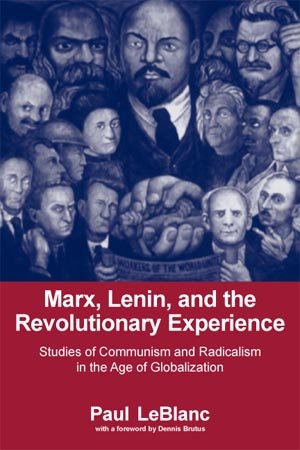
From Monthly Review:
Paul LeBlanc is what I have called an "organic intellectual," a scholar and activist who has risen directly out of the working class. Paul is the author of many books, including A Short History of the U.S. Working Class (Humanity Books, 1999) and Black Liberation and the American Dream (Humanity Books 2003), and is an internationally known and respected historian of the life and works of Rosa Luxemburg.
Thursday, August 10, 2006
The Noneconomic Objections to Capitalism.

Ludwig von Mises recognizes five objections to Capitalism. This post is excerpted from Part IV of his The Anti-Capitalistic Mentality.
I will post more on this soon, but I wanted to get the word out first.
Subscribe to:
Posts (Atom)
